InstiCo Logistics

Table of Contents

Executive Summary

Ocean freight delays are one of the most constant sources of frustration in global supply chains. Blank sailings (for example, canceled sailings) are a contributor to sea freight delays and decrease ocean carrier schedule reliability.

As ocean shipping companies have unpredictable sailing schedules, lead times become unpredictable as well. This requires companies to change their approach to their inventory levels and safety stock planning.

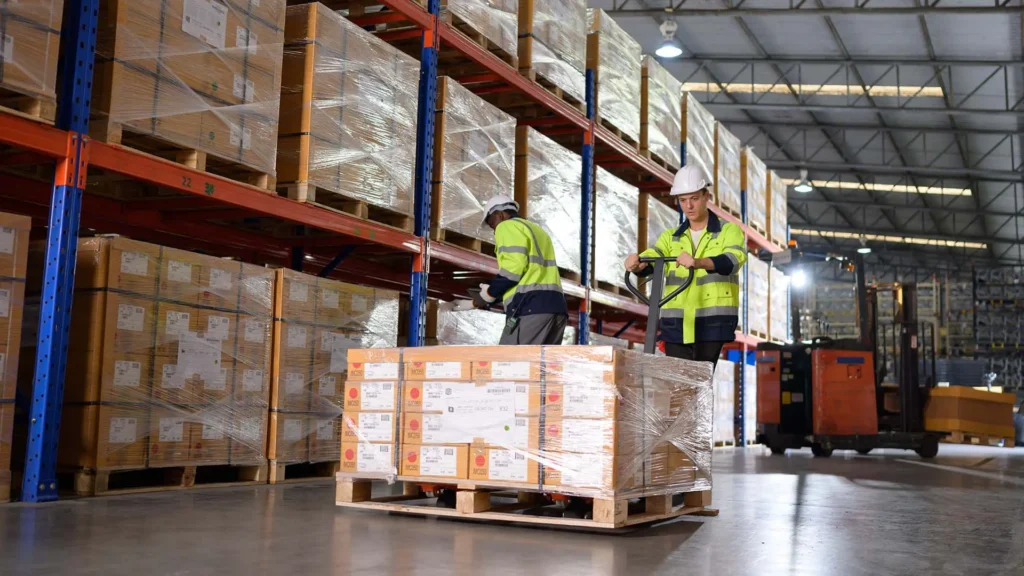
The advanced safety stock planning method, combined with the use of buffer inventory, provides companies with coverage from these disruptions, without the need for constant order expeditions or stopping production.

InstiCo Logistics provides clients with improved visibility, ocean shipping programs, efficient drayage, and customized strategies to assist clients in managing ocean freight delays while continuing acceptable levels of service and control over costs.

Introduction

Shipping today is dominated by volatility.

Blank sailings, low schedule adherence, and business interruptions (tariffs, disruptions due to the Red Sea, and port congestion) are leading to lower than acceptable levels of ocean carrier schedule reliability.

As a consequence, there are ongoing delays in international and domestic ocean freight, and these delays increase costs while causing stress to supply chains.

Utilizing smart inventory and safety stock planning can help companies alleviate the impact of blank sailings. By holding a targeted amount of buffer inventory, companies can weather a disruption rather than needing to react with costly air cargo or risk lost sales.

This white paper details how logistics providers such as InstiCo Logistics can help clients manage the instability of ocean carriers’ sailing schedules by developing a disciplined safety stock planning process.

What are Blank Sailings and Ocean Freight Delays

Blank sailings happen when carriers void an entire voyage or drop port calls from the rotation.

They differ from individual container rollovers and usually stem from:

Poor cargo demand

Heavy port congestion

Political tensions are forcing carriers to take longer routes (and taking longer routes impacts freight rates)

Carriers are making decisions to avoid revenue dilution

All such scenarios damage the ability of ocean carriers to establish reliable schedules. Geopolitical tensions in 2025 and early 2026 pushed on-time performance on many Asia-USA routes well below historical averages.

The affected supply chains will continue to experience significant ocean freight delays and inconsistent ETAs. It makes traditional just-in-time models fragile.

The Actual Cost of Sea Freight Delays

When ships disappear from the sailing schedule, the effect is vast. From lead times that vary to safety stock planning that is guesswork, companies can expect to encounter the following:

U.S. importers are especially impacted on both coasts because of drayage bottlenecks, worsening the effects of ocean freight delays.

Without consistently managing safety stocks and proactively managing inventory to build a buffer, total supply chain costs will rise rapidly.

Why Buffer Inventory Works Against Ocean Freight Delays

Buffer inventory helps manage sea freight delays when the schedule is unreliable. It serves as a source of inventory to fill in the gap.

Advanced safety stock planning goes beyond simple rules of thumb:

Uses statistical models (lead-time demand variability, service-level targets)

Factors in historical blank sailing frequency per trade lane

Adjusts dynamically for seasonality, tariffs, or geopolitical risk

The goal is clear: hold just enough buffer to maintain desired fill rates without tying up excessive capital.

8 Practical Ways to Reduce Sea Freight Delays

There is no universal solution to reduce sea freight or ocean freight delays. However, implementing a multi-layered approach can help minimize the risk of encountering delays.

The following are eight tips for reducing delays in ocean freight:

  1. Use multiple carriers that belong to different alliances to avoid relying on a single carrier.
  2. Reserve spaces aboard vessels as early as you can.
  3. For your freight to receive priority loading in a congested seaborne freight market, cultivate strong working relationships with the carriers.
  4. Utilize real-time vessel tracking apps to allow visibility of incoming vessels.
  5. Use system-generated exception alerts to anticipate potential issues.
  6. Move your freight closer to your final destination by utilizing nearshoring or regional sourcing for the majority of your ocean leg shipping.
  7. Use advanced methodologies in safety stock planning rather than relying on it as a fixed number, which will better absorb irregularities in your supply chain.
  8. Make sure your logistics partners use optimal methods to coordinate drayage services, provide milestone tracking info, and optimize freight routing in locations known for congestion. It will help you anticipate whether your shipments will arrive on time.

These tips will help you improve your overall supply chain and reduce your risk of experiencing a delay in shipping via the ocean.

How InstiCo Logistics Supports Inventory and Safety Stock Planning

InstiCo Logistics integrates ocean freight coordination with end-to-end visibility and domestic trucking.

Clients gain:

By combining ocean carrier sailing schedules data with client-specific demand patterns, InstiCo helps right-size buffers,  protecting against sea freight delays while keeping carrying costs in check.

Conclusion

Ocean freight delays and declining ocean carrier schedule reliability are structural features of today’s shipping environment, not temporary blips.

Buffer inventory, guided by advanced safety stock planning, remains one of the most effective and controllable ways to maintain continuity.

When paired with diversified booking, real-time visibility, and reliable drayage, it turns sea freight delays from crises into manageable noise.

InstiCo Logistics stands ready to help U.S. businesses apply these strategies, from smarter inventory and safety stock planning to proactive ocean freight management.

Reach out to discuss how we can strengthen your supply chain against the next wave of uncertainty.

References

    insights, Logistics Trends, & Industry newsletter

    How to Reduce Short Haul Freight​ and Drayage Freight Rate​

    Freight costs don’t usually rise without warning, but when they do, drayage freight rate increases and..

    Freight Brokerage Services Powering Modern Supply Chains

    Businesses need shipments to move faster and without delays. Moving goods today is not as simple..

    Flatbed Shipping for Heavy and Oversized Freight Transport

    Moving very large or oddly shaped items isn’t as simple as putting them on a truck...

    Access the InstiCo Resources Library

    Strategic insights, case studies, and expert research.

    Unlock Logistics Intelligence

    Whitepapers, e-books, and proven client results.

    Explore Industry Resources

    Knowledge to streamline your supply chain.

    Subscribe to the InstiCo Newsletter

    Strategic insights, case studies, and expert research.

    Get Logistics Intelligence Delivered

    Whitepapers, e-books, and proven client results.

    Explore Industry Resources

    Knowledge to streamline your supply chain.

    Subscribe to our Newsletter