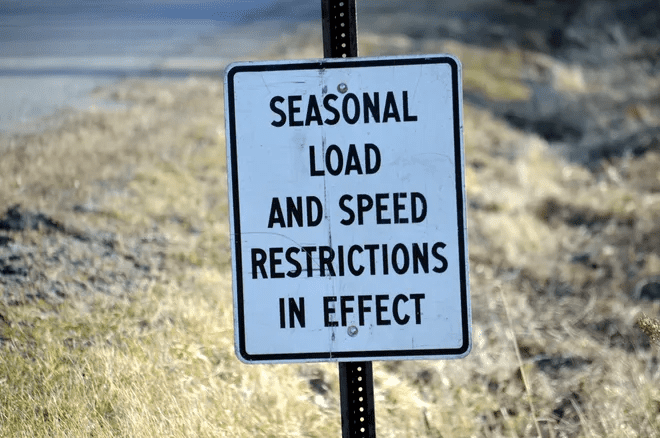
The lifting of frost laws and weight restrictions in July has a significant impact on flatbed freight capacity for oversize transportation. This period sees increased demand for flatbed equipment across both northern states and southern regions, often leading to tighter capacity and higher costs. In this blog, we explore how lifting frost laws affects flatbed freight demand, pricing, and strategies to secure capacity during peak season.
I. Impact of Lifting Frost Laws and Weight Restrictions:
Opening up Roadways for Oversize Freight:
Lifting frost laws and weight restrictions in July allows for the transportation of oversize freight on roadways that were previously restricted.
This enables the movement of larger and heavier loads, expanding the capacity for open-deck transportation.
II. Increased Demand for Open-Deck Capacity:
Northern States:
In northern states with colder climates, the lifting of frost laws and weight restrictions in July leads to a surge in demand for open-deck capacity.
Industries such as construction, agriculture, and manufacturing require the transportation of oversized equipment, machinery, and materials during this period.
Southern Regions:
Southern regions also experience an increase in demand for open-deck capacity as the lifting of frost laws and weight restrictions allows for the transportation of oversize freight.
Industries such as oil and gas, renewable energy, and construction often require the movement of large components and equipment.
III. Cost Implications and Strategies for Securing Open-Deck Capacity:
Cost Implications:
The increased demand for open-deck capacity during this period may lead to higher freight rates due to limited availability.
Additional costs may be incurred for permits, escorts, and specialized equipment required for oversize freight transportation.
Strategies for Securing Open-Deck Capacity:
Plan Ahead: Start the transportation planning process early to secure open-deck capacity and ensure timely delivery of oversize freight.
Work with Experienced Carriers: Partner with transportation providers who have expertise in oversize freight transportation and are familiar with the lifting of frost laws and weight restrictions.
Utilize Load Boards and Freight Marketplaces: Explore load boards and online freight marketplaces to connect with carriers who specialize in open-deck transportation.
Consider Intermodal Options: Explore intermodal transportation options that combine rail and trucking to optimize capacity and cost-effectiveness for oversize freight.