For modern businesses navigating the complexities of a globalized market, selecting the ideal logistics provider is one of the most critical decisions. A great supply chain can be your competitive advantage; a poor one can shatter customer trust and inflate costs.
This expert guide details how to choose a logistics partner that aligns with your strategic goals, ensuring efficiency, scalability, and stability.
What is a Logistics Partner?
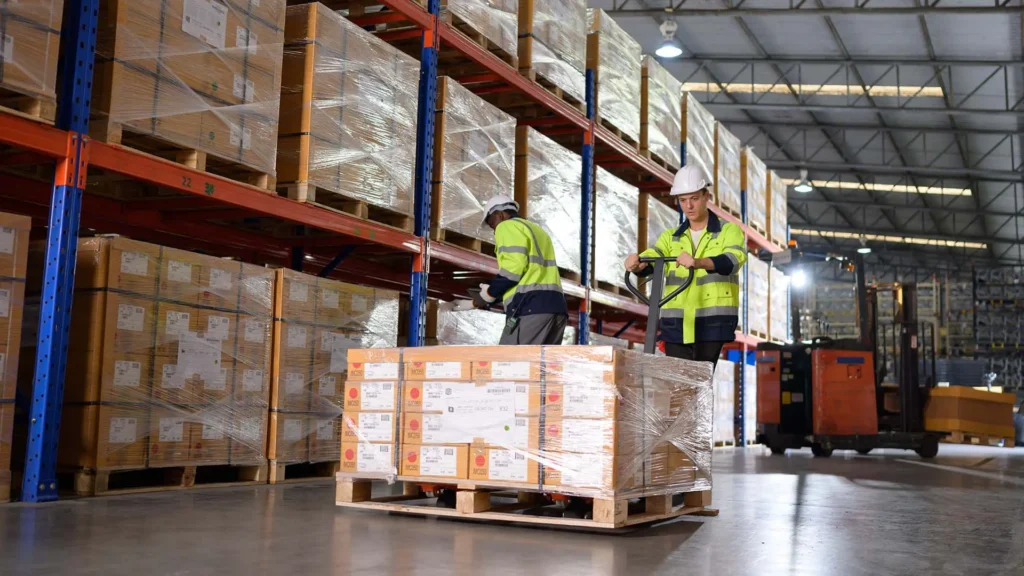
A logistics partner, also known as a third-party logistics provider (3PL), manages and optimizes parts of your supply chain. This allows you to concentrate on core business areas like sales and marketing while they handle fulfillment, warehousing, and transportation.
Unlike a simple carrier that only provides transportation, a comprehensive logistics company offers a suite of integrated logistics services and solutions, which may include warehousing, transportation, fulfillment, packaging, and customs brokerage.
Why Do You Need a Logistics Partner? (What Do They Do)
The booming global 3PL market, valued at around $1.2 trillion in 2024 and projected to surpass $2.5 trillion by 2034, highlights the increasing demand for efficient logistics solutions driven by e-commerce growth.
A dedicated logistics provider allows you to leverage this growth by:’
- Scaling Quickly: Providing immediate access to nationwide or global networks for managing seasonal peaks or rapid growth.
- Reducing Costs: 3PLs consolidate shipments and leverage a vast network to secure better freight rates and reduce empty miles, leading to significant savings over in-house logistics.
- Gaining Expertise & Technology: A logistics partner brings specialized knowledge and invests in advanced technology (like Transportation Management Systems, or TMS) that most smaller firms cannot afford.
- Improving Customer Experience: Timely, accurate deliveries and transparent tracking are non-negotiable today. A reliable 3PL ensures high on-time delivery rates, which directly translates to customer satisfaction and loyalty.

Which Industries Need Logistics Partners?
While often associated with e-commerce, nearly every industry that moves physical goods requires sophisticated logistics solution providers:
- Retail & E-commerce: Fulfillment, returns management, and last-mile delivery.
- Manufacturing: Management of raw materials (inbound logistics) and finished goods (outbound logistics), often utilizing complex ocean freight services and air freight services.
- Healthcare & Pharmaceuticals: Requires highly specialized cold-chain logistics and strict regulatory compliance.
- Automotive: Managing just-in-time (JIT) parts delivery to assembly plants.
- Technology & Electronics: Handling high-value, sensitive, and often bulky equipment.
10 Key Questions To Ask Logistics Companies
The decision of how to choose a logistics partner hinges on a deep dive into their operational capabilities and cultural fit. Use this checklist of questions to ask logistics companies to ensure you find a reliable and experienced match.
1. What is your specialty and industry experience?
Ask if they have a proven track record in your specific sector, such as hazmat or retail apparel, to ensure their expertise aligns with your needs and enhances trust.
2. How scalable and flexible are your operations?
Your logistics partner must handle volume peaks (like holidays) without issue.
3. What technology and visibility tools do you provide?
Ensuring your logistics Partner offers real-time data and integration options allows you to monitor shipments and make informed decisions effectively. Modern logistics runs on data. You need a partner who offers real-time, end-to-end visibility.
4. What is your geographic coverage, especially in key regions?
If your primary market is domestic, ensure they have a strong network, particularly among 3PL logistics providers in the USA. If you ship internationally, confirm their expertise in customs, tariffs, and cross-border compliance.
5. What are your key performance indicators (KPIs) for reliability?
Focusing on measurable metrics like on-time delivery and order accuracy helps you assess their dependability and build trust. Trust is built on measurable performance. Focus on metrics that directly impact your customers.
6. What is your pricing structure, and what are the hidden fees?
Look for transparent pricing. Numerous accessorial or handling charges often offset the lowest initial bid of all potential surcharges (fuel, residential, detention, etc.) and a contingency plan for cost increase.
7. How do you handle loss, damage, and claims?
In a complex supply chain, issues inevitably arise. A great logistics services provider has a proactive resolution process with a defined shrinkage allowance and a typical turnaround time for claim processing.
8. What security and compliance measures do you enforce?
This includes certifications or security protocols like physical security at their facilities (warehousing) and compliance with industry regulations (e.g., C-TPAT, FDA), and a place to protect high-value inventory.
9. What are your expectations for partnership communication?
You need a dedicated account manager with a guaranteed response time for critical issues outside of normal business hours who is accessible and proactive.
10. How do you approach sustainability?
Measures you are taking to reduce your carbon footprint, such as route optimization and green fleet investment, are increasingly important to consumers alongside environmental, social, and governance (ESG) factors.
Why Choose InstiCo As Your Trusted Logistics Partner
Choosing InstiCo means partnering with experts who view logistics not as a cost center, but as a strategic asset.
- Customization Through Expertise: Our team provides specialized logistics consulting services to analyze your entire supply chain, identifying bottlenecks and designing custom logistics solutions providers tailored to your unique product and market needs.
- Global Reach, Local Service: Whether you require delicate air freight services for time-sensitive cargo or large-scale ocean freight services for bulk goods, InstiCo offers seamless multimodal solutions worldwide.
- Commitment to Visibility: We integrate cutting-edge technology to give you complete, real-time control, answering the central question of modern logistics: Where is my shipment right now?
Don’t just move products; move your business forward, partner with InstiCo Logistics.
FAQs
How do logistics partners support small businesses?
A third-party logistics provider allows small businesses to compete with industry giants by accessing enterprise-level infrastructure, technology, and discounted carrier rates that they couldn’t afford on their own. This immediate scalability enables small businesses to handle large order volumes and expand geographical reach instantly without capital investment in warehouses or trucks.
What are the 7 C's of logistics?
The 7 C’s of logistics are a critical framework used by professionals to optimize the supply chain and ensure resilience and effectiveness. They represent the holistic elements required for successful operations:
- Coordination
- Communication
- Costs
- Compliance
- Capacity
- Customer Satisfaction
- Continuous Improvement
How can a logistics partner help reduce shipping costs?
A reputable logistics provider reduces shipping costs primarily through Consolidation and Optimization. They consolidate smaller shipments from multiple clients into Full Truckload (FTL) or Full Container Load (FCL) bookings, achieving major volume discounts. Additionally, they use advanced software to optimize routes, load density, and carrier selection, minimizing wasted space, fuel, and time.
What is the difference between a 3PL and a logistics partner?
The terms are often used interchangeably, but “logistics partner” emphasizes the relationship, while 3PL (Third-Party Logistics) is the classification.
- 3PL: A company classified as a third-party logistics provider offers outsourced services like transportation and warehousing.
- Logistics Partner: A third-party logistics provider (3PL) becomes a true partner when they offer strategic consultation, thoroughly integrate with your business processes, and align their goals with yours. This can include providing logistics consulting services. The term “partner” signifies a long-term, collaborative, and strategic relationship that goes beyond a simple transactional vendor relationship.