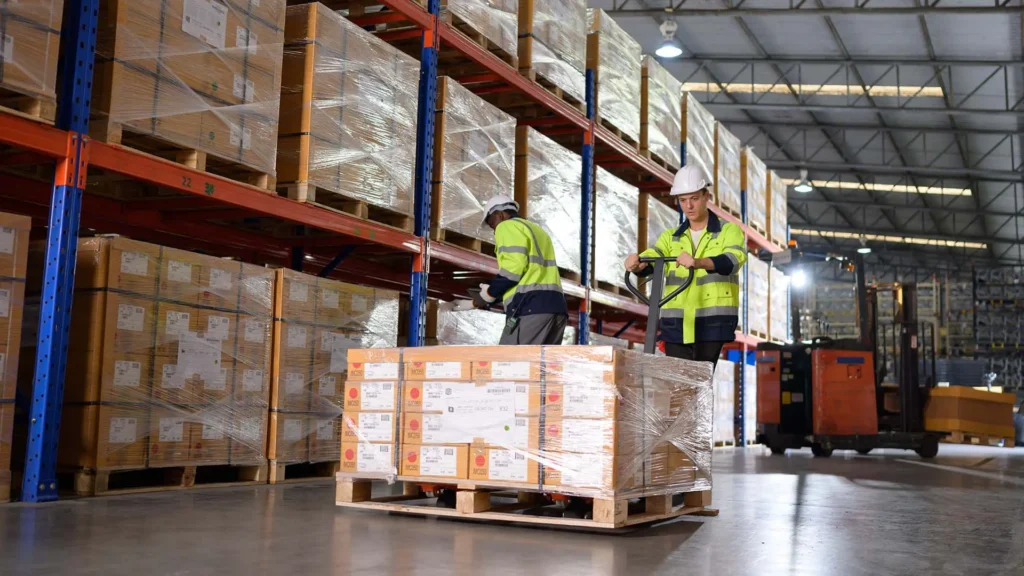
For businesses that ship goods over the road, the key decision often lies in choosing between Less-Than-Truckload (LTL) and Full Truckload (FTL) freight shipping.
In supply chain management, choosing the right transportation mode is a strategic decision that greatly impacts costs, transit times, and customer satisfaction. Grasping the differences between full truckload (FTL) and less-than-truckload (LTL) shipping is essential for optimizing logistics services and maintaining a competitive advantage.
At Instico Logistics, we leverage technology and expertise to assist clients in navigating these choices, ensuring that every shipment is managed with precision and transparency.
In this blog, we will explore the meanings of FTL and LTL, how they differ, how they function, when to use each method, and the factors to consider when choosing between FTL and LTL.
What Does Full Truckload (FTL) Mean
Full-truckload (FTL) shipping refers to a shipment mode where a single shipper uses the entire capacity of a truck (or equivalent vehicle) from pickup to delivery, without shared space. This indicates that the truck proceeds directly from the origin to the destination, with minimal transfers of cargo or stops.
Key characteristics of FTL include:
- Dedicated truck/trailer for one shipper’s goods.
- Often used when freight volume is large enough to fill the truck, or when time-sensitivity and direct routing are critical.
- Faster transit and fewer touches (e.g., fewer handoffs or intermediate terminals).
- Generally simpler logistics in terms of routing and handling.
From an expert perspective, when you contract FTL shipping via your logistics services partner, you gain control over packaging, schedule, and the carrier’s door-to-door responsibility.
What Does Less-Than-Truckload (LTL) Mean
Less-than-truckload (LTL) shipping is the mode where multiple shippers’ freight is consolidated into one truck. Your shipment uses only part of the truck’s capacity, sharing space with cargo from others.
Key aspects of LTL:
- Consolidated freight: multiple smaller shipments combined.
- Cost-efficiency when your freight does not fill an entire truck.
- Additional handling: there may be docking, terminal transfers, and consolidation/de-consolidation steps.
- Ideal for smaller shipments, frequent dispatches, and apportioning cost among shippers.
In the modern logistics ecosystem, LTL is increasingly important, especially for businesses that ship less than full loads, wish to optimise cost, or operate in fragmented supply chains.
Understand the Difference – LTL vs. FTL
With the logistics industry witnessing significant changes in 2025, understanding the difference between Less-Than-Truckload (LTL) and Full Truckload (FTL) has never been more relevant for businesses of all sizes.
Here’s a comparison to highlight how FTL and LTL differ, helping you see clearly when one may be preferable over the other.
| Feature | FTL (Full Truckload) | LTL (Less-Than-Truckload) |
| Truck utilisation | Dedicated to a single shipper | Shared among multiple shippers |
| Transit time | Typically faster due to direct routing and fewer stops | May take longer due to consolidation, terminal handling, and multiple stops |
| Cost structure | Higher overall cost but lower cost per unit if full capacity is used | Lower cost for smaller shipments, but potentially higher cost per unit if frequent or complex |
| Suitability | Large shipments, time-sensitive freight, single consignee | Smaller shipments, multiple consignees, cost-sensitive load |
| Handling complexity | Minimal handoffs, simpler chain of custody | More handling, possible intermediate warehouses/terminals |
| Risk profile | Control is higher (you occupy a full trailer) | Some risk from shared handling and multiple touches |
How Do FTL and LTL Freight Shipping Work?
When your shipment is large, time-sensitive, or too valuable for shared transport, Full Truckload (FTL) shipping offers the speed, control, and security your operations need. Unlike LTL, where freight is consolidated and transferred multiple times, FTL moves your goods in a dedicated truck from point A to point B with minimal handling. This streamlined approach not only reduces risk, it also shortens transit times and gives you clearer end-to-end visibility. Here’s a quick breakdown of how the FTL and LTL process typically works.
FTL Process Flow
- Shipment booking: You schedule a dedicated truck/trailer via your logistics provider.
- Truck dispatch & load: Trailer is assigned, your goods are loaded at the origin.
- Direct transit: Trailer travels directly to the destination, with minimal intermediate stops or transfers.
- Delivery: Trailer is unloaded at the consignee’s location.
- Empty return or next load: Carrier either takes the next assignment or returns empty.
Because of the direct routing and minimal handling, FTL tends to have faster lead times and a simpler chain of custody.
LTL Process Flow
- Shipment booking: You book a smaller shipment (e.g., a few pallets) via your logistics services provider.
- Consolidation & pickup: Carrier picks up your shipment and moves it to a terminal or consolidation hub.
- Sorting & routing: Freight from multiple shippers is grouped and routed through hub networks, possibly transferring between trucks.
- Terminal handling: Unload/reload, check, and route freight at intermediate hubs.
- Delivery truck dispatch: Once freight is grouped for your destination area, final-mile truck dispatches for local delivery.
- Delivery: Your consignee receives the shipment.
Because of the multiple touches and consolidation logic, transit can be slower and visibility more complex; however, cost per shipment is typically lower for smaller loads.
At Instico Logistics, we advise on optimising both FTL and LTL processes, and we guide customers to choose the model that aligns with their freight profile, cost target, destination geography, and timeline.
When to Choose FTL vs. LTL?
The logistics market continues to evolve rapidly, driven by e-commerce and technological advancements. According to recent reports, the Global FTL and LTL Shipping Services Market size was valued at around USD 6,376.99 billion in 2025, indicating the monumental scale of these services globally. Choosing the right mode depends on the following criteria:
Choose FTL When:
- Your Shipment is Time-Sensitive: FTL is essential for just-in-time (JIT) manufacturing or urgent retail replenishment, as transit times are faster and more reliable.
- You Have High-Value or Fragile Goods: Minimal handling reduces the likelihood of damage, making FTL the safest option.
- Your Shipment is Large: FTL becomes the more economical choice when the shipment volume crosses a certain threshold. The FTL Road Freight Market is substantial (projected to reach USD 1.5 Trillion in 2025), confirming its dominance for bulk goods.
Choose LTL When:
- Your Shipment is Small: LTL is designed specifically for maximizing efficiency for smaller loads. The LTL Market is valued at USD 239.0 billion in 2025, showcasing the high demand for this shared-space solution.
- Cost Savings are the Priority: Sharing the trailer space with other shippers significantly lowers the expense compared to hiring an entire truck.
- You Need Flexibility for E-commerce: The growth of e-commerce is a major driver of LTL demand. LTL carriers are increasingly relying on technologies like AI for routing to manage frequent, smaller trips, offering enhanced flexibility to meet customer expectations.
Things to Consider When Choosing FTL vs LTL
When selecting between FTL and LTL, several key factors should guide your decision:
- Shipment size/volume: If you can fill most of a truck, FTL may deliver better unit cost and faster transit.
- Destination geography: Remote or difficult routes may have premium costs for either mode—your provider should guide you.
- Transit time/urgency: If speed is critical, FTL’s direct routing is an advantage. LTL may involve terminals and routing.
- Cost per unit vs total cost: While LTL often lowers total cost for smaller loads, FTL may be more cost-effective if you’re utilising full truck capacity.
- Handling risk/product type: If your goods are fragile, high-value, or require minimal handling, FTL may provide more control.
- Destination consolidation / multiple stops: If your goods go to multiple drop-points or you’re shipping to many consignees, LTL can be more efficient.
- Carrier reliability/visibility: Choose a logistics services provider that gives real-time tracking, good carrier networks, and strong service levels.
- Sustainability/efficiency: Many businesses now factor in environmental and efficiency metrics. Shared loads (LTL) can reduce empty-trailer miles, but fewer touches (FTL) can reduce risk and damage.
- Future growth/flexibility: Consider how your shipping patterns may evolve—will your volume increase (making FTL more viable) or remain small/frequent (so LTL stays optimal)?
- Total supply-chain impact: Think beyond the shipper–carrier leg: how does this mode integrate with warehousing, last-mile delivery, returns, cross-docking? Your logistics services partner should map the full chain.
In summary, the difference between full truckload (FTL) and less-than-truckload (LTL) freight shipping lies in volume, routing, cost structure, handling complexity, and transit time.
Understanding when to use each mode is critical for efficient freight operations, and having a logistics services partner who knows the market, carriers, and best practices makes all the difference.
At Instico Logistics, we apply our expertise, experience, and market insight to help you choose the right shipping mode: whether FTL for direct, high-volume loads, or LTL for flexible, cost-efficient small shipments.
Let Instico Logistics guide you in selecting, implementing, and optimising your freight shipping strategy, so you can focus on your core business while we take care of the transport.
FAQs
Is LTL cheaper than FTL?
Not necessarily in all cases. For smaller shipments (that don’t fill a truck), LTL can be more cost-effective because you pay only for the portion of space you use. However, if you’re shipping near-full loads, FTL may offer a lower cost per unit and faster transit, making it the better value. The smart choice depends on volume, routing, urgency, and the carrier network.
When should I choose LTL over FTL?
Choose LTL when your freight volume is modest, you have multiple drop destinations, you are less time-critical, or you want to optimise cost by sharing truck space with others. If your shipments are smaller, frequent, and flexible in terms of timing, LTL makes sense.
How do LTL and FTL shipping rates compare?
FTL rates are typically set for a full trailer or truck, regardless of whether you fill it. You pay for the capacity. LTL rates are calculated based on weight, dimensional space, freight class, and distance, because you’re sharing space. So for low-volume shipments, LTL often offers a lower absolute cost. But for high-volume shipments, FTL may yield a lower cost per pallet or per ton, and less transit time.
Can I use a mix of LTL and FTL?
Absolutely, many companies adopt a hybrid approach. For example, they might use FTL for large, time-sensitive outbound shipments, and LTL for smaller replenishment loads or less time-critical routes. As your logistics services partner, Instico Logistics can design a strategy that combines both modes optimally across your network, balancing cost, speed, reliability, and volume fluctuations.