Why traditional planning stops working and what logistics leaders must do now
In a time of swift growth in digital commerce and changing consumer habits, retail supply chains are facing exceptional pressures. The freight plan in retail, that is, how different items, especially goods, move from point to point, is directly fashioned on accurate retail demand forecasts. The difference between demand signals, even though based on actual events, and what is occurring in reality is one of the most significant challenges that a modern supply chain has to face.
In this blog, we’ll explore why this mismatch happens, how it impacts freight planning, and what retail freight managers and freight brokers must do to stay competitive.
Why Demand Signals Often Lag Reality
At the heart of the challenge is the fact that many forecasting systems still depend on historical data. Even though this approach is valuable, it results in a lag, particularly if the nature of the market is dynamic due to factors such as seasonality, promotions, and economic and social issues.
For instance, it has been observed that when retailers apply traditional approaches, forecasting models may fail to work during peak season, with error rates increasing by 40-60% due to the fact that the assumptions no longer hold as in the past.
The Retail Forecasting Gap
Even well-designed demand planning models can fall short when they rely too much on past data. The bullwhip effect, where small variations in consumer demand cause larger variances upstream, often amplifies these errors in freight planning.
Inadequate retail demand forecasting can lead to two costly outcomes:
- Excess inventory ties up capital and increases storage costs.
- Stockouts or expedited freight are hurting customer satisfaction and margins.
A recent forecast adoption study showed that 77% of retail executives prioritize demand planning tools in 2025, reflecting how crucial accurate forecasting has become.
How Retail Demand Forecast Challenges Hurt Freight Planning
1. Mismatched Capacity Planning
Freight planning for any retailer transcends evincing an awareness of how much freight there is and when there will be freight. If these forecasts are not keeping pace with likely requirements, they might not be enough to cover peak freight windows or anticipate capacity requirements during these periods.
From greater insights about freight as a whole, it is known that the demand for freight services, especially in the area of retail freight, experiences +15% YoY variations.
2. Cost Inflation from Reactive Planning
When forecasts lag, retailers often react, not plan. This reactive state can lead to expensive last-minute freight solutions, such as premium air freight or expedited services. Last-mile logistics alone can consume up to 53% of the total cost to move goods; the final delivery makes or breaks efficiency. These reactive freight moves inflate operational costs and compress profit margins, a pressure often felt most acutely by retail freight managers.
3. Inventory Imbalances
This can be attributed to the fact that, as discussed in various retail logistics reports, imbalances such as over-stocking or under-stocking are all a result of poor forecasting, and as such, they will affect freight flow. In case of imbalances in inventory, freight planners are forced to change freight sizes mid-cycle.
Bridging the Forecasting Gap: Best Practices for Retail Freight Planning
1. Embrace Predictive Freight Analytics
Predictive freight analytics, for its part, anticipates future freight needs rather than just tracking past events, thanks to the power of AI and machine learning, greatly improving responsiveness.
Key benefits of this strategy include:
- The early detection of surges in demand
- Better capacity allocation
- More realistic ETA estimates
2. Align Retail and Logistics Data
Cross-functional planning, wherein demand planners, merchandisers, and logistics teams share data, bridges the disconnect between forecast and execution.
Techniques like CPFR, on the other hand, would help in coordinating decisions along the supply chain and reduce mismatches, thereby making timely freight bookings possible
3. Use Real-Time Demand Sensing
According to industry research, retailers who use real-time systems to monitor their business can react up to 45% faster to changes in demand, while at the same time experiencing 30% fewer stockout issues. Real-time information from various sources, which can include POS, online behavior, social media, and external market factors, allows freight planners to respond to any impending issues.
4. Promote Flexible Freight Strategies
A rigid freight plan works only when demand behaves predictably. Instead, supply chains must be:
- Agile: Able to scale up or down quickly.
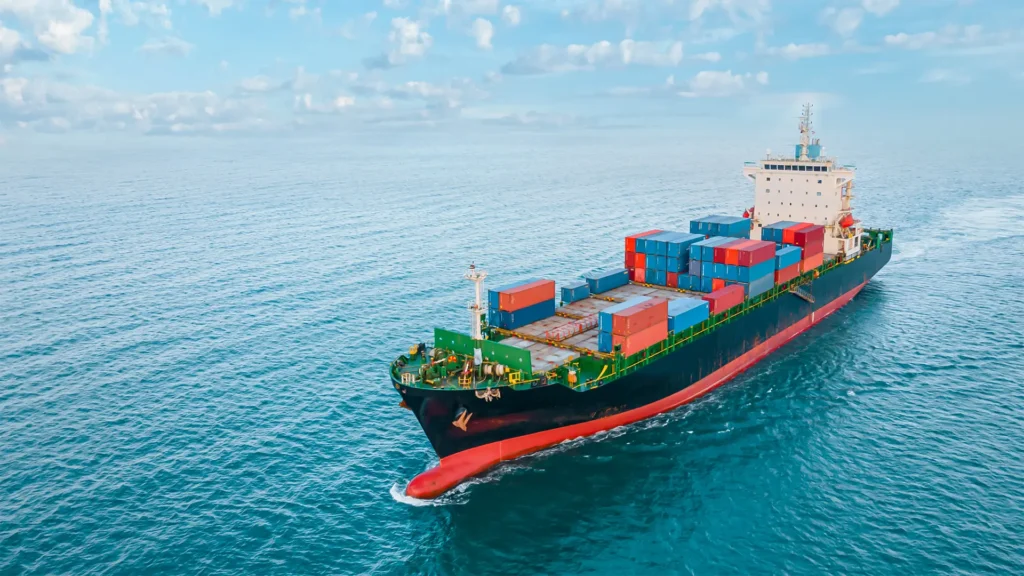
- Multi-modal: Blending sea, air, rail, and truck based on real-time needs.
- Carrier-diverse: Avoiding single points of failure.
This flexibility becomes vital when traditional demand signals fall out of sync with actual consumer behaviour.
Supply and Demand: Why Retail Freight Managers Need a New Lens
Demand forecasting has ceased to be merely a statistical exercise; it is now a strategic imperative. The retail freight manager will need to transition from an operational coordinator to a strategic planner, interpreting the demand signals well in advance of the actual demand.
This shift involves:
- Breaking down information silos
- Integrating advanced analytics and automation
- Constantly updating forecasts (instead of monthly or quarterly reviews)
Companies that adopt real-time demand planning not only reduce logistics costs and delivery delays but also strengthen customer loyalty and gain a competitive edge in both traditional and e-commerce retail.
Freight Brokers: A Business Plan Built for Reality
For freight brokers entering the retail logistics space, building a resilient business model requires acknowledging the demand-signal lag challenge. A strong freight broker business plan would include:
- Investment in digital tools for forecasting and career matching
- How to exploit real-time market data
- Operational playbooks for surge periods and promotions
A sample freight broker business plan that expects volatility to set in will emphasize risk-reducing strategies, such as flexible carrier contracts, data-driven pricing models, and contingency plans in peak seasons.
This investment in systems design to expect unpredictability, rather than reacting to it when disaster strikes, shows that brokers demonstrate more credibility with retail partners.
The Bottom Line
The disconnection between demand signals and reality is threatening current approaches to retail freight planning. Yet, it also provides a tremendous opportunity, and it is for those who invest in predictive analytics, demand sensing, and cross-enterprise planning that the future is bright.
Thus, waiting for traditional forecasts to arrive can result in reactive freight decisions, high costs, and dissatisfied customers. In contrast, a proactive approach to freight planning, facilitated by data utilization and agility, provides efficiency, reliability, and a competitive edge.
Future-Proof Your Retail Freight Strategy
At InstiCo Logistics, we specialize in the art of bridging the space between demand forecasting and freight execution. If you are a retail freight manager looking to gain insight from current planning trends or a freight broker creating a strategic business plan, we can help.
Partner with InstiCo Logistics now and transform inadequate demand signals into competitive foresight.
FAQs
What documents are required for air freight shipping?
The most critical document is the Air Waybill (AWB), which acts as a receipt and a contract. You will also need a Commercial Invoice, a Packing List, and potentially a Certificate of Origin depending on the destination.
Is air freight suitable for perishable or fragile goods?
Yes, it is the preferred method for these items. The shorter transit time reduces the risk of spoilage for perishables, and the reduced handling compared to sea shipping makes it safer for fragile items.
Is air freight more expensive than sea or road shipping?
Generally, yes. Air freight charges are higher because of fuel costs and the limited capacity of aircraft. However, you can often save money on insurance and warehousing, which offsets some of the initial costs.
What is the difference between air cargo and air courier services?
Air courier is typically “door-to-door” and handles smaller parcels with all-in-one pricing. Air cargo is usually “airport-to-airport” for larger shipments and requires a freight forwarder to manage the “last mile” and customs.
Can small businesses use air freight services?
Absolutely. Many small businesses use air freight to maintain low inventory levels and respond quickly to customer demand without needing a massive warehouse.