Cold chain problems usually start quietly. A product sits too long before pickup. A temperature alert gets missed. A handoff is unclear, and customs takes longer than expected. It may not look like a serious problem. But in pharma, small gaps can build into real risk.
Even a minor temperature issue can cause problems in pharmaceutical logistics that go beyond a late shipment. It can raise compliance questions, impact product viability, add financial cost, and ultimately create risk for patient care.
Product quality can be questioned, compliance becomes harder to show, and customer trust starts to slip. Patient safety is part of the concern. The pharma cold chain needs more than refrigerated equipment. It needs planning, ownership, and steady communication from storage to final delivery.
What Is Cold Chain Logistics in Pharma and Why Does It Matter?
The biggest mistake companies make with pharma cold chain logistics is treating it like a transportation issue alone. It is really a risk management issue.
Every transfer, storage point, customs check, and delivery stop creates another place where temperature-sensitive products can be exposed. That is why the FDA’s Current Good Manufacturing Practice rules require pharmaceutical products to be stored and transported under conditions that protect their identity, strength, quality, and purity during distribution.
Strong cold chain programs are not built just to check a compliance box. They are built to protect patients, preserve product integrity, and maintain trust across the supply chain.
What is cold chain logistics in pharma?
This involves storing, handling, moving, tracking, and delivering temperature-sensitive medicines and healthcare products throughout the overall supply chain.
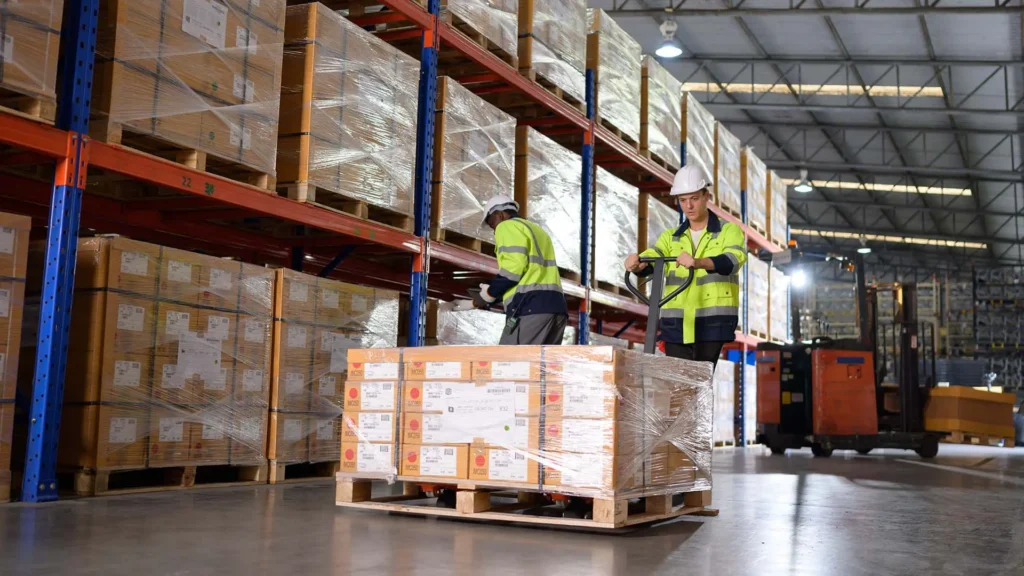
The simple answer is temperature control here, and the harder part is keeping that control through the full move. A product may move through a warehouse, a truck, an airport, a customs point, a local carrier, and a delivery site. Every stop matters. Every handoff needs someone responsible.
The role of pharma cold chain management from production to delivery
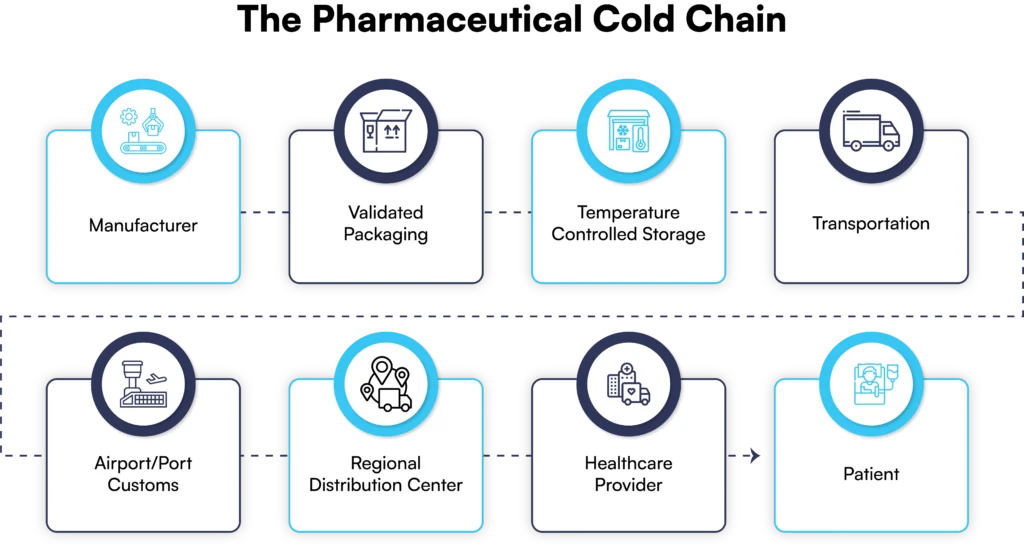
Good pharma cold chain management starts before the shipment is booked. The team needs a clear understanding of the product, storage requirements, packaging limits, route, carrier, monitoring setup, paperwork, and response plan. Waiting until a delay happens is too late.
Many companies focus on the refrigerated truck first. That is understandable. But the truck is only one part of the move. The product still goes through staging, loading, weather, customs, and several handoffs before it reaches the customer. If those points are not planned well, the shipment carries more risk than it should.
The strongest cold chains aren’t reactive, but they’re designed around identifying and reducing risk before the shipment ever leaves the facility.
The Biggest Pharma Cold Chain Risks Companies Face Today
The issue is not only temperature. The critical part is keeping control while the shipment keeps changing hands.
Pharma cold chain storage and temperature control
Pharma cold chain storage is one of the first risk points. If the product starts in poor condition, transportation cannot undo that later. Storage issues can come from long dock time, poor staging, weak backup plans, or unclear release steps. Packaging also needs to match the route. A validated packout may work in normal conditions, but long dwell time or route delays can quickly change the risk.
USP guidance on storage and transportation of finished drug products treats proper storage and transport as critical supply chain activities. It also focuses on risk control, process control, and handling conditions.
Pharma cold chain monitoring across the supply chain
Pharma cold chain monitoring helps teams see what is happening during the shipment. Sensors, GPS tracking, data loggers, and alerts can catch temperature changes, delays, or handling issues before they grow into bigger problems. But seeing the issue does not protect the product by itself.
We’ve seen companies spend on strong monitoring tools and still lose time when something goes wrong. The alert comes in. The risk is clear. What is not clear is who makes the next call or what needs to happen first.
A good cold chain process does more than collect data. It sets the response plan before the shipment moves. When each team knows its role, it is easier to act quickly, protect the product, and reduce the impact of delays. Technology identifies problems. Well-designed processes solve them.
International pharma cold chain compliance and transportation risks
An international pharma cold chain has more places for delay. A shipment may move through airports, customs, storage points, local handlers, and more than one carrier. Each handoff needs care. Paperwork also needs to be clear, because every country may have its own process.
Experienced operators plan for these issues before the product leaves. IATA’s CEIV Pharma program also focuses on the people, facilities, equipment, and operations used to handle pharma air cargo.
Pharma Cold Chain Risk Matrix
Cold chain risk is easier to manage when teams look at it before the shipment moves. The issue is not only what can go wrong. It is whether the business knows the impact and has a clear response ready.
Risk | Potential Impact | Best Practice |
Temperature excursion | Product degradation, shelf-life reduction, product loss | Use continuous temperature monitoring and validated packaging |
Customs delay | Temperature instability, delivery delay, and added cost | Prepare complete documentation and plan customs requirements early |
Power outage | Storage failure, temperature instability, product loss | Maintain backup equipment and schedule preventive maintenance |
Poor handoff communication | Missed alerts, chain-of-custody gaps, delayed response | Set clear response protocols and chain-of-custody ownership |
A table like this keeps the conversation practical. It helps teams see where risk enters the process, what it can cost, and who needs to act before the issue grows.
Building a More Reliable Pharma Cold Chain for Long-Term Success
Reliable cold chain pharma performance does not come from one tool or one carrier choice. It comes from discipline in the process.
We usually look at most prior areas:
- Risk Assessment
- Temperature Control
- Visibility
- Compliance
- Response Planning
If one part is weak, the shipment carries more risk.
Moving the product at the right temperature is only part of the job. The process also has to work when something changes. That takes planning, communication, and people who know when to act.
Conclusion
Pharma cold chain success is not only about whether the shipment arrives on time. The real measure is whether product quality, regulatory compliance, and patient safety are protected through the full move.
Every shipment carries some risk. Strong companies do not assume every disruption can be avoided. They prepare for them early, with validated processes, qualified logistics partners, real-time visibility, and clear execution before the freight reaches the road.
At InstiCo Logistics, we see cold chain logistics as part of protecting trust. That means helping customers build transportation plans that protect product integrity, support compliance, and give them more confidence from origin to final delivery.
FAQs
What products need cold chain logistics in pharma?
Vaccines, biologics, insulin, specialty drugs, clinical trial materials, and other temperature-sensitive products may need cold chain handling. The exact need depends on the product’s storage instructions.
What causes temperature excursions in pharma shipments?
Common causes include loading delays, equipment failure, weak packaging, long dwell time, customs delays, missed alerts, and unclear handoffs.
How can companies reduce cold chain pharma logistics risk?
Start with better lane planning, proper packaging, qualified carriers, clear monitoring, and a response plan. The process works better when everyone knows who owns the next step.