As far as logistics is concerned, there is always a search for “Goldilocks.” In other words, a solution is always being sought that is more rapid than ocean transport, more affordable than air transport, and more effective than trucks when combined with trains for long-distance transport. For many companies, the key is intermodal shipping.
If you have ever seen a train pulling hundreds of uniform steel boxes across the countryside or watched a massive crane lift a container from a ship directly onto a truck trailer, you have witnessed intermodal transportation in action. But what exactly happens behind the scenes?
Let’s dive deep into what intermodal shipping is, how it streamlines supply chains, and why it might be the smartest move for your business’s bottom line.
Understanding Intermodal Transportation
At its core, intermodal transportation is referred to as carrying goods that involve two or more modes of transport, such as truck, rail, or ship, where there is no handling of the goods when they are transferred between modes.
The “magic” of this system lies in the intermodal containers. With intermodal containers, standardized steel boxes are used, which ensure that commodities are sealed right from the point of origin to the point of delivery. Whether it is a ship, a truck, or a train that carries the steel boxes containing commodities, they are untouched. It hence reduces the chances of theft or damage while rapidly shortening delivery times.
Within the context of the logistics services sector, intermodal is usually the spine of trade, domestic as well as international, providing a scalable solution to the firm conveying a massive amount of cargo over long distances.

How Intermodal Shipping Works (Step-by-Step)
To understand how intermodal shipping works, it helps to look at a typical journey. While every supply chain is unique, most intermodal movements follow a structured four-step process:
- Origin Drayage: The process begins with a truck picking up an empty container from a yard and bringing it to the shipper’s warehouse. Once loaded, the truck (performing “drayage”) hauls the container to a local rail terminal.
- The Long Haul (Rail): At the terminal, a crane lifts the container onto a specialized railcar. This is the “middle mile” – most of the total distance is covered here. Rail is much more fuel-efficient for long distances compared to trucking; thus, this is the most economical part of the process.
- Destination Drayage: Once the train reaches the destination terminal, the container is lifted off the railcar and placed onto a truck chassis.
- Final Delivery: This is when the local driver delivers the container to the consignee’s warehouse or storefront for unloading.
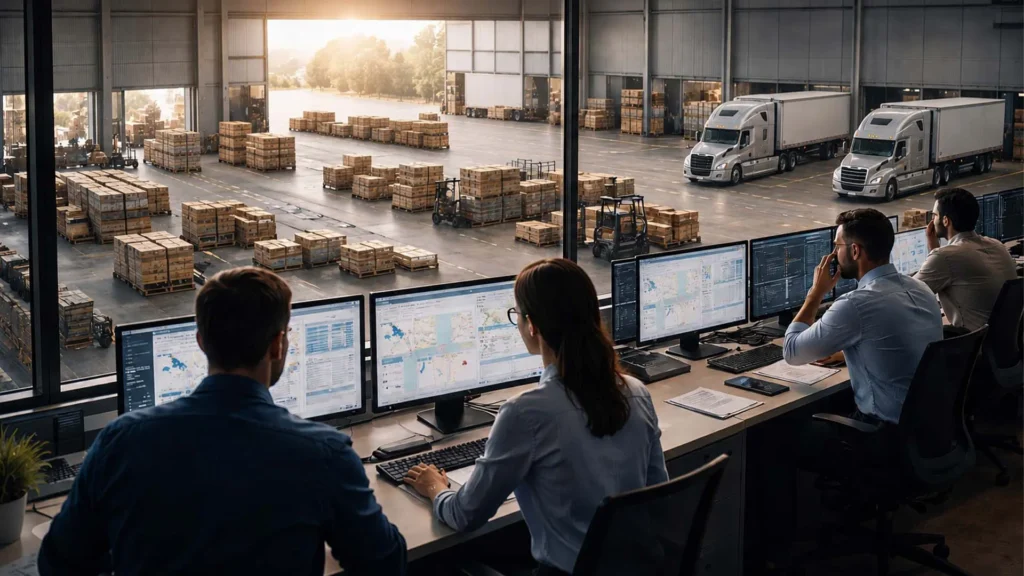
During all this, the intermodal logistics provider follows the move with advanced GPS and TMS (Transportation Management Systems) to make sure that handoffs between truck and rail happen smoothly.
Components of Intermodal Freight Transportation
Several moving parts must synchronize to make intermodal freight transportation successful:
- Intermodal Containers: Usually 20, 40, 45, or 53 feet in length. The 53-foot container is the standard for domestic North American shipping.
- The Chassis: A specialized trailer frame used by trucks to carry containers over the road.
- Rail Terminals & Ports: These act as the “hubs” where containers are transferred between ships, trains, and trucks.
- Drayage Trucks: These are the “short-haul” trucks that bridge the gap between the shipper/receiver and the rail ramp or port.
Benefits of Intermodal Transportation
Why are so many Fortune 500 companies shifting their freight to the tracks? The benefits of intermodal transportation extend far beyond just moving a box from A to B.
1. Significant Cost Savings
When shipping over long distances, such as more than 500 miles, rail is far more economical than over-the-road trucking. Since the transport capacity for as many as several hundred trucks can be handled by a single train, intermodal shipping is more economical by several multiples.
2. Enhanced Sustainability
If your company has “green” initiatives, intermodal is a game-changer. Trains can move one ton of freight nearly 500 miles on a single gallon of fuel. By choosing rail over long-haul trucks, businesses can reduce their carbon footprint by up to 75%.
3. Increased Capacity and Reliability
The trucking industry often faces driver shortages and highway congestion. Intermodal provides access to “hidden” capacity. When truck beds are scarce, the rail lines offer a consistent, scheduled alternative that isn’t as heavily impacted by road construction or traffic.
4. Safety and Security
As far as intermodal containers are concerned, since they are closed at the point of origin and opened only at the port of destination, a “human touch” is avoided to a large extent. Thus, chances of theft or any damage during handling are reduced to a significant extent.
What Affects Intermodal Shipping Rates?
The process of negotiating shipping costs for intermodal transport may be more complicated than for trucking due to the increased number of factors that are considered. These factors include the following:
- Fuel Surcharges: Both rail and truck fuel costs fluctuate, though rail is generally less sensitive to price spikes.
- Drayage Distance: The further your warehouse is from the rail ramp, the higher the drayage cost.
- Seasonality: Peak shipping seasons (like the lead-up to the holidays) can tighten container availability and drive up prices.
- Equipment Availability: The supply of empty containers and functional chassis in a specific region can impact the daily rate.
To get the most value, many shippers utilize drop trailer shipping strategies within their intermodal plan, allowing drivers to drop a container and leave, which avoids costly detention fees.
The Role of Intermodal Logistics in Supply Chain Efficiency
It is expert management of intermodal logistics that will keep the system from failing. It is a matter of synchronization. If the truck is late for the rail ramp, it may just miss its train and could be delayed for a full day.
Top-tier logistics services leverage technology to provide real-time visibility. By combining the data flow from trains and telematics from trucks, customers can easily track the position of their shipment, whether it’s moving via the highway in Ohio or via the rail siding in Nebraska. Such visibility enables companies to effectively control their inventory and satisfy the requests of customers.
Intermodal transport is now an option, and for some, it has become the need of the day for an effective and agile supply chain. This happens when businesses capitalize on the flexibility offered by road transport and the strength of rail transport.
Stop overpaying for long-haul freight and switch to rail shipping with InstiCo Logistics. We provide custom intermodal transportation solutions tailored to your needs, including seamless drayage and optimized rail routing.
Contact us today for a personalized quote and see how our expertise can enhance your bottom line.
FAQs
What types of goods are best suited for intermodal shipping?
Almost any dry goods can be shipped intermodally. Common items include electronics, apparel, paper products, and non-perishable food. High-value or heavy items are also great candidates due to the security and weight capacity of rail.
How long does intermodal shipping usually take?
Typically, intermodal is 1 to 3 days slower than a dedicated long-haul truck. However, because trains run on set schedules and don’t have to stop for “driver hours of service” in the same way trucks do, the transit times are very predictable.
What is the difference between intermodal and multimodal transport?
In intermodal transport, each leg of the journey is handled by a separate carrier with separate contracts. In multimodal transport, one single provider (like a 3PL) handles the entire journey under one contract, even though multiple modes are used.
Do intermodal shipments require special packaging?
Because rail travel involves some “slack action” (the movement of cars connecting/disconnecting), it is important to use proper blocking and bracing techniques to ensure goods don’t shift inside the container.